
Article
Beyond our doorsteps: How rangoli connects communities this Deepavali
6 November 2026
Through her passion for the colourful intricacies of rangoli, 67-year-old Vijaya Mohan creates connections and teaches the art form to different communities. Her story highlights how a simple welcoming act can inspire us to open our doors and connect with others.
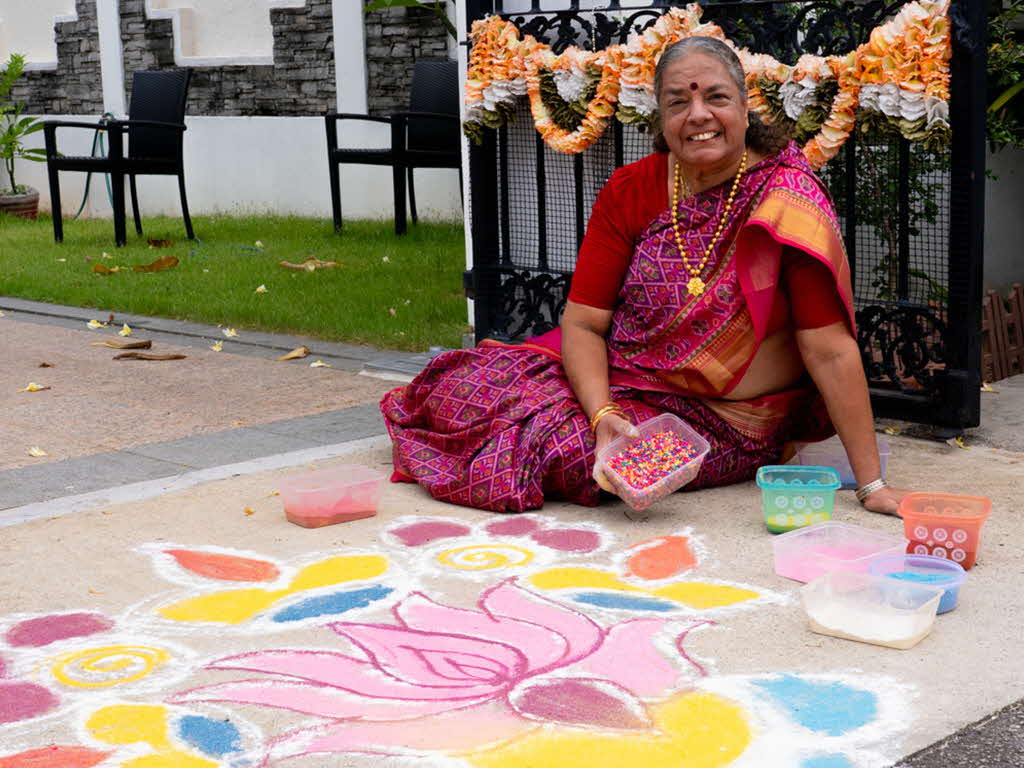
Vijaya Mohan with a rangoli she created.
With swift strokes of colourful rice flour, 67-year-old Vijaya Mohan adorns the entrance of her home with elaborate rangoli designs. Each morning, she brings the intricate art to life with flowing movements, drawing on more than six decades of experience.
Introduced to rangoli by her parents at the age of six, Vijaya has continued creating the designs daily as a form of self-expression. Her passion has won her several accolades and recognition – including the Guinness World Record for the largest rangoli pattern.
She was awarded the record in 2003, when she created a rangoli spanning 256 square metres, roughly the size of three badminton courts, in just seven hours.
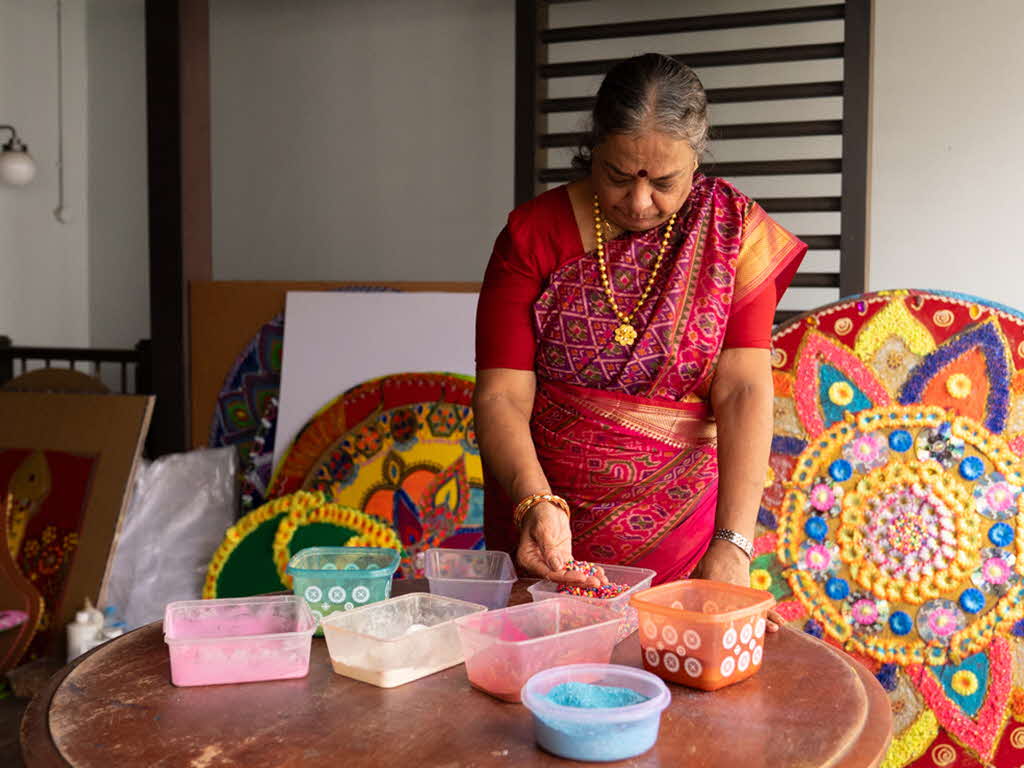
Vijaya preparing her rangoli materials for a workshop.
Nourishing mind and nature
A traditional Indian art form practised for generations, rangoli (or kolam in Tamil) involves arranging coloured rice powders and organic materials on the ground in intricate, geometric patterns. Often drawn at the entrance of homes, these nature-inspired designs are believed to bring good luck and dispel evil.
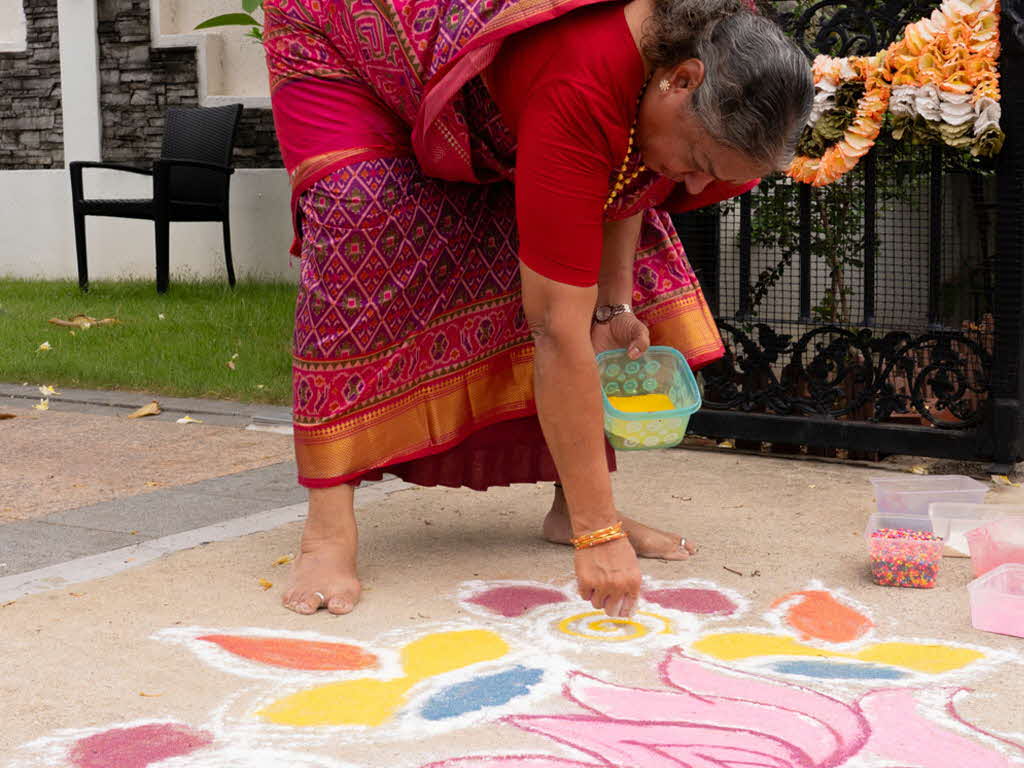
Vijaya creating a rangoli at the front of her house.
For Vijaya, making rangoli is never a chore. As an art therapist, she harnesses the calming power of creation through her work.
“The touch and feel, sensory experience, and bright and colourful visual stimulation are very good therapeutically,” she said.
She rarely plans her designs in advance, and prefers to let inspiration guide her hand. “Whatever comes to my mind, I just draw,” she added, though peacocks remain her favourite motif.
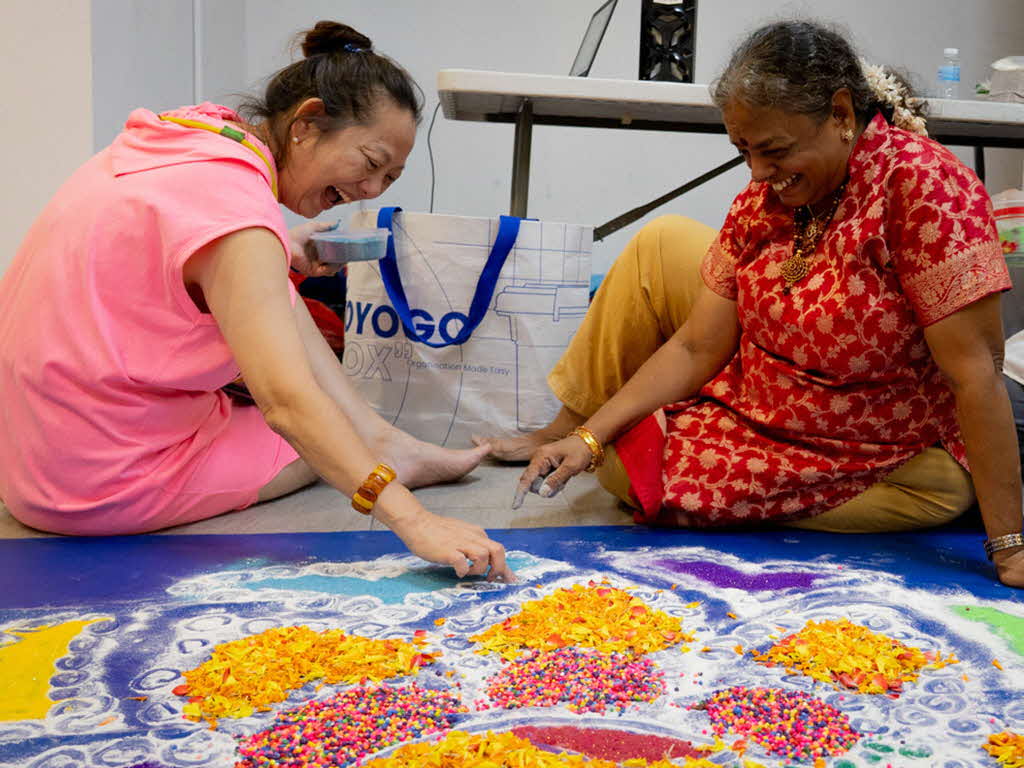
Vijaya teaching a participant to make rangoli during a community Deepavali celebration.
Touching hearts through art
For Vijaya, rangoli is more than a personal creative practice - it is an opportunity to bring people together. Believing in the art form's healing power, she has made it her mission to share its joy with the wider community.
Over the years, she has collaborated with over 20 organisations, including senior homes and special needs schools, to introduce rangoli to new audiences. Once a month, she meets with migrant workers to create rangolis together and distribute food to them.
To reach younger generations, Vijaya has experimented with digital versions of the art form with students, asking them to design rangoli on their iPads. Vijaya also created Singa Rangoli, which combines traditional rangoli designs with everyday household materials. Participants use items like ang pow packets, old CDs, and bottle caps to create their patterns. These designs can be created while seated, and they make for long-lasting artworks. This also makes it more inclusive for those who may find it difficult to create designs on the floor.
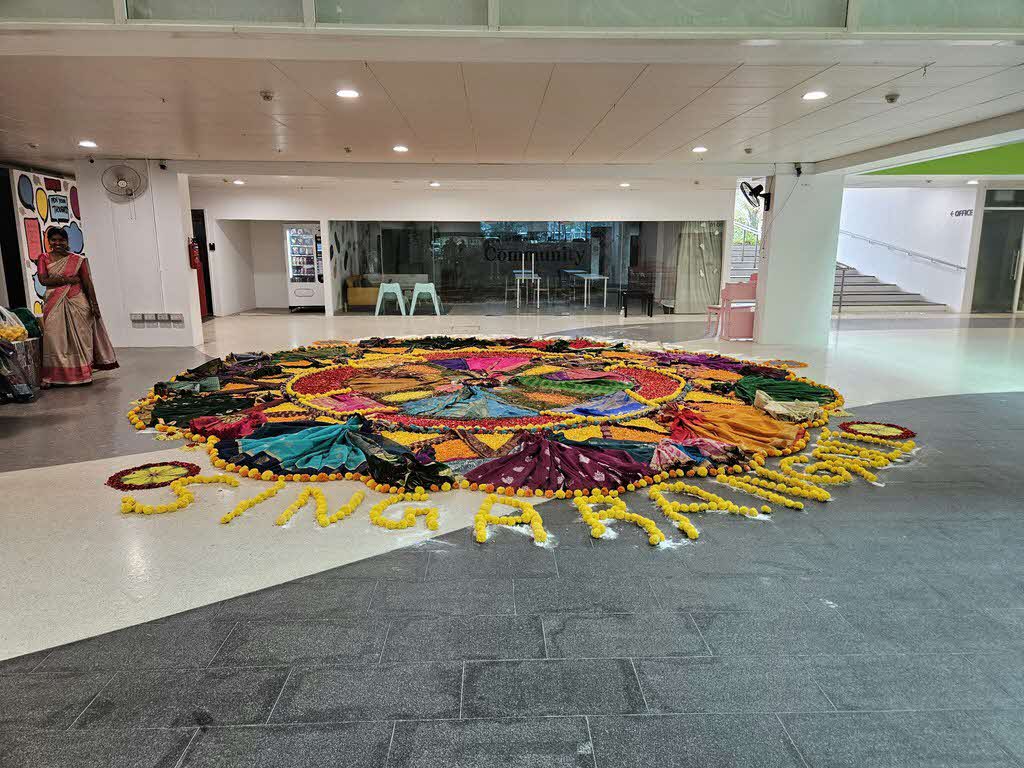
Singa Rangoli created with sarees at the International Women's Day Celebration at Cairnhill Community Centre on 8th March 2025.
To her, making rangoli with others is as much about the experience as the finished design. She encourages participants to relax, enjoy themselves and even dance along to music as they create.
“I tell them, ‘If you like music, switch on some music,’” Vijaya said. “Whenever I make a big artwork with the public, I will invite everybody to dance with me, so that they can feel relaxed.”
She also assures those who might feel worried about messing up their designs. “Even if you make a mistake, we can fix it.”
Celebrating the Festival of Lights
During Deepavali, Vijaya also creates opportunities for people from different backgrounds to come together and experience the joy of making art. The yearly community events are open to all.
This year, she participated in a community event to kick off the festivities in Little India, bringing together participants across generations and backgrounds. Attendees included kindergarteners and patients from the National Kidney Foundation, among others.
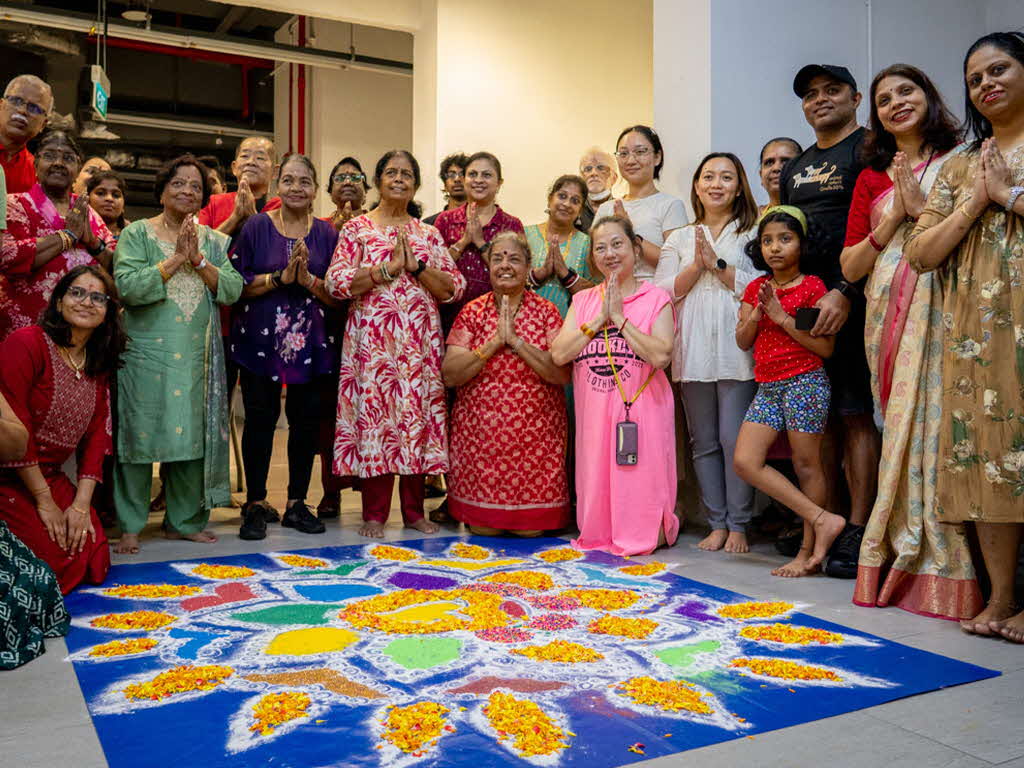
Vijaya celebrating Deepavali with the community.
At the event, Vijaya also brought her signature blend of art and festivity to the celebrations by leading a Bollywood dance after creating a rangoli made from edible candles with members of the public.
For her, these shared experiences are about more than creating beautiful designs. They offer an opportunity for people to participate in a cultural tradition, enjoy one another's company, and keep the art form alive for future generations.
She recounted meeting an interfaith community group once: “I told them, please bring your youth. I want to teach them rangoli, so that the art form is passed on and preserved.”
“It’s very nice, very fun (when people come together). I want more and more people to join.”
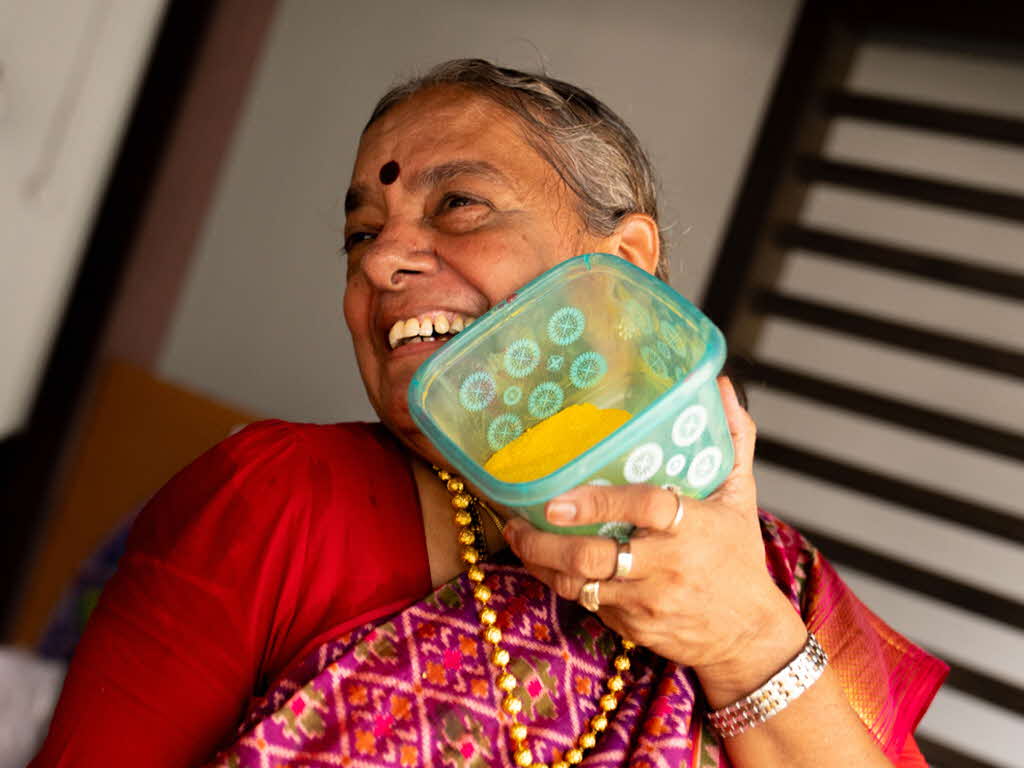
Vijaya smiling with her rangoli materials.
Keeping her passion alive
Despite all the recognition she has gained through her art, Vijaya has never lost sight of what rangoli means to her – the simple peace she finds from creating, and the joy of sharing it with others.
Her passion has also taken her outside of Singapore, including places like Chicago and Barcelona, where she has taught freehand rangoli drawing to fellow artists. She dreams of holding an exhibition where visitors can discover how simple household materials can be transformed into intricate designs.
Closer to home, Vijaya hopes to pass on her love for the art form to the next generation, including her daughter and grandson. The fleeting nature of rangoli serves as a reminder to appreciate the moment and let go of attachment.
“Beauty is not permanent, so it teaches you not to hold attachment,” she said.
Even after undergoing major surgeries, she still finds joy and passion in creating rangolis. In May, she underwent a stomach operation, and by June, she was up and about, sharing the beauty of rangoli at an event in Italy.
While rangoli is often temporary, Vijaya’s passion for the art form has endured through the years. Reflecting on her journey, she hopes to continue creating rangolis for a long time, as it energises her and gives her purpose. “I want to do rangoli for as long as I can!”