
Article
Carrying Zapin Forward: A Journey with the UNESCO-Nominated Malay Dance Form
28 October 2026
Zapin, a traditional dance form unique to the Malay Archipelago, will be jointly nominated to the UNESCO Representative List of the Intangible Cultural Heritage of Humanity (ICH). We explore the dance form in depth with 40-year-old Dr Noramin Farid, Singapore's first Malay dance scholar, who shares what zapin means to the region and to him personally.
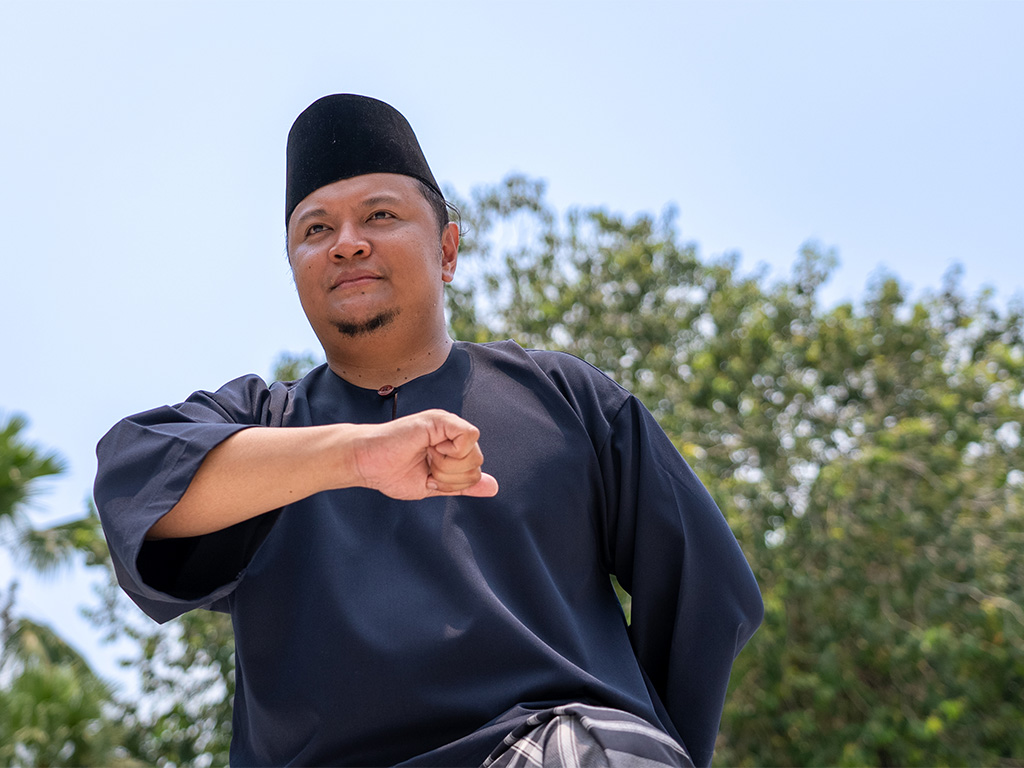
Dr Noramin Farid performing zapin.
Dr. Noramin Farid wears many hats. He is an arts educator, researcher, and above all, a zapin practitioner deeply connected to the heritage he studies.
Zapin is one of the five foundational genres of traditional Malay dance, alongside asli, inang, joget, and masri. To honour and preserve the cultural and historical importance of this art form, Singapore, together with Brunei Darussalam, Indonesia and Malaysia, will be submitting a joint nomination for its inscription onto the UNESCO Representative List of the Intangible Cultural Heritage of Humanity.
To better appreciate the significance of this nomination, we speak to Dr Noramin about his personal relationship with zapin and his continued efforts to carry forward a dance form that is at least seven centuries old.
The origins of zapin
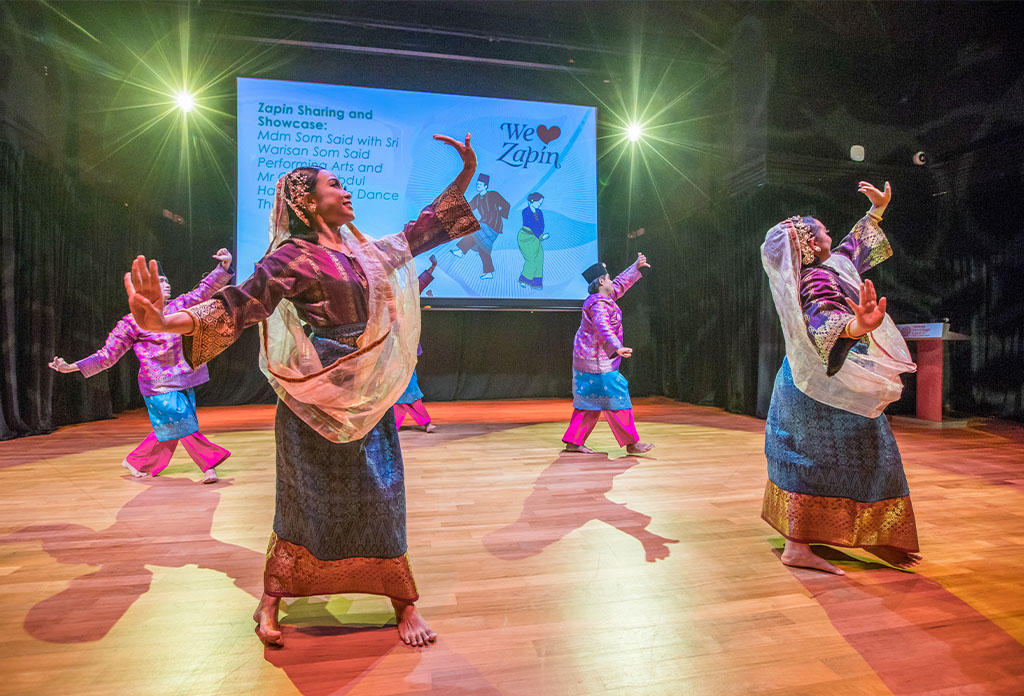
Som Said Performing Arts dancers performing zapin telok blanga at the National Heritage Board’s zapin sharing and showcase. (Photo Credit: National Heritage Board)
Zapin traces its roots to the Arabian Peninsula. Around the 14th century, traders from Yemen introduced zafin, a traditional dance and musical art form with devotional and worship aspects, to the Malay archipelago.
Zafin has distinct drum patterns and an emphasis on footwork. When the Malay communities adopted the dance, they incorporated the hand gestures from their community. These movements reflected daily communal life, maritime activities, and natural imagery and symbolism. Woven into the synchronised steps, these elements created what we now know as zapin.
Today, there are many variants of zapin. Dr Noramin explains that choreographers draw inspiration from the natural world around them, weaving their observations and lived experiences into the dance.
“In Singapore, we have long used water as inspiration. For example, Osman Abdul Hamid drew inspiration from his observations of daily life at the Sungai Kallang (‘Kallang River’ in Malay) to create Zapin Sungei Kallang. He included movements such as boat rowing, bailing water, and the actions of fishermen. Azmi Juhari, the creator of Zapin Gemersik Ombak (‘Rustling waves’ in Malay), focused on the way waves move.
Malay people are deeply connected to the earth and sea. There is the philosophy captured in the words tanah (‘land’ in Malay) and air (‘water/sea’ in Malay). Both words come together to form ‘tanah air’ or homeland. Dancing zapin can therefore reflect localised experiences.
This connection is reflected in our philosophies and the way we create movement. That’s why zapin is an art form that connects us together and creates a sense of belonging, not just among Singaporeans, but across the Malay archipelago.”
Zapin’s journey to UNESCO recognition
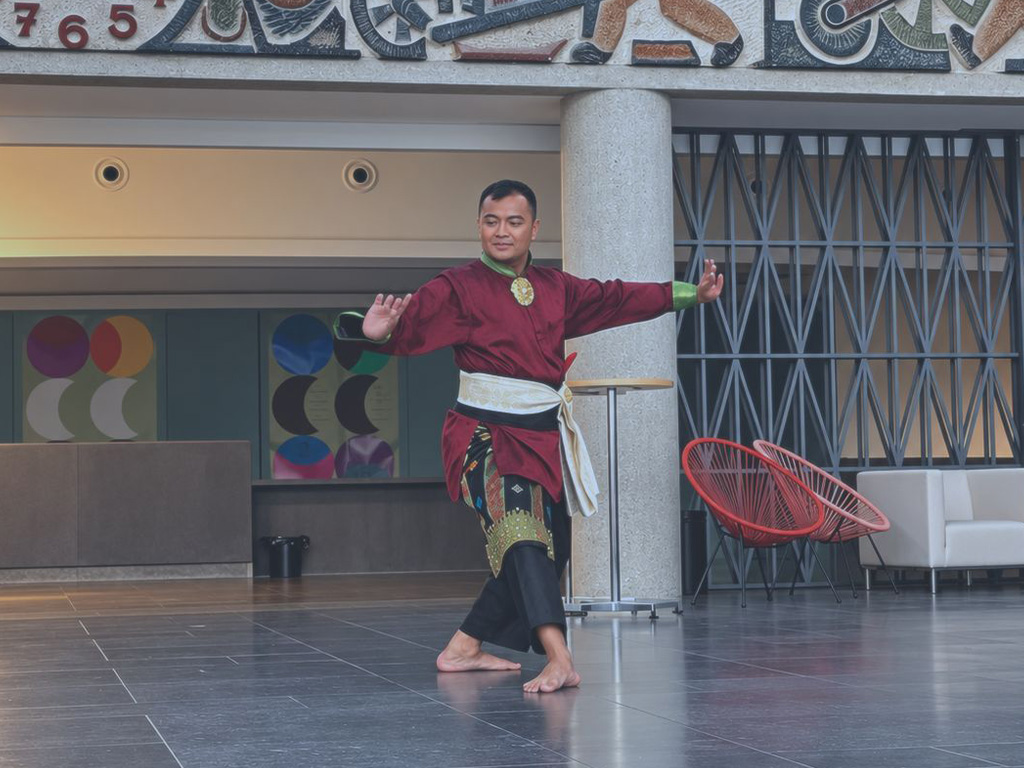
Dr Noramin performing zapin with silat movements at a festival in France, in 2022. (Photo Credit: Dr Noramin Farid)
This shared heritage is the reason for the multinational effort to nominate zapin to the UNESCO Representative List of the Intangible Cultural Heritage of Humanity. (opens in new tab) For Dr Noramin, the nomination represents something deeper than formal recognition. It is a further opportunity for communities across borders to collectively affirm the cultural significance of zapin, exchange knowledge and practice, and celebrate a key part of their shared identity.
“Personally, I am very happy and love that zapin has been jointly nominated because it's an acknowledgement that Malay communities across nation-states share a common cultural heritage and are actively practising it.
Secondly, it increases awareness of zapin, especially in Singapore. With this nomination, there can be more awareness and opportunity for more people, including those outside the community, to appreciate and discover this art form.
It’s similar to how the kebaya was jointly nominated and is now widely recognised in its many different variations. If, one day, a non-Malay friend were to watch a Malay dance performance on stage and be able to recognise zapin through the music or movement, it would be the happiest day of my life.”
How Dr Noramin practises zapin as an art form
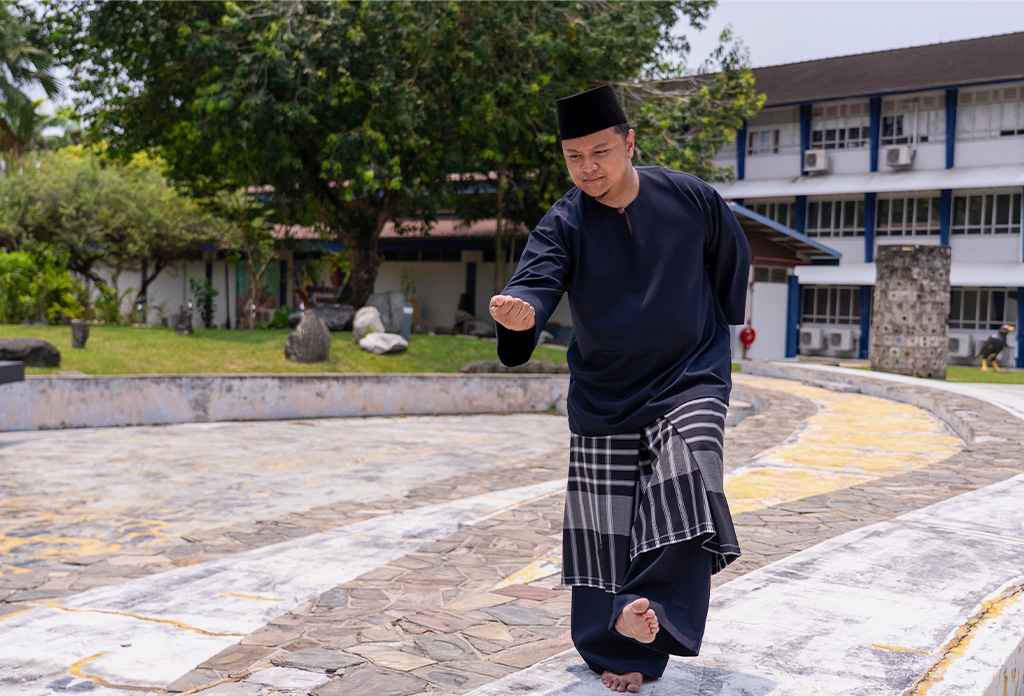
Dr Noramin Farid, showing a zapin move, tumpang lalu, which can mean “permission to pass through”.
Dr Noramin started dancing in his teens with one of the oldest Malay dance groups in Singapore, Perkumpulan Seni, which was founded in 1956.
“My teacher introduced me to Zapin Gelombang (‘Wave’ in Malay), a dance that was created in the early 2000s. It had fast and slow wave-like elements, and the music felt epic and distinctly contemporary. I was excited by how zapin is a fast-paced dance.”
In zapin, the lower body stays connected to the earth, representing humility and groundedness. Dancers keep their knees bent in a position similar to a ballet plié while the upper body is given more freedom to be expressive.
“When dancing zapin, I tend to explore and move my hands a lot because I have very fluid arms and fingers. I can move in a way that reflects my inner self. It is a form that brings together the best of two worlds — one that is grounded and one that is free.”
When choreographing his own zapin movements, Dr Noramin does so in front of a mirror to ensure his dance movements meet rhythmic and aesthetic expectations. In zapin, Dr Noramin explains there is an expected gender decorum.
“The male dancers have masculine movements (staccato, big, and sharp) and female dancers have more feminine movements (demure, softer, and smaller). When a pair dances together, it is meant to reflect the harmonious coming together of two souls. These elements must always be present in a zapin.”
Keeping zapin alive for generations to come
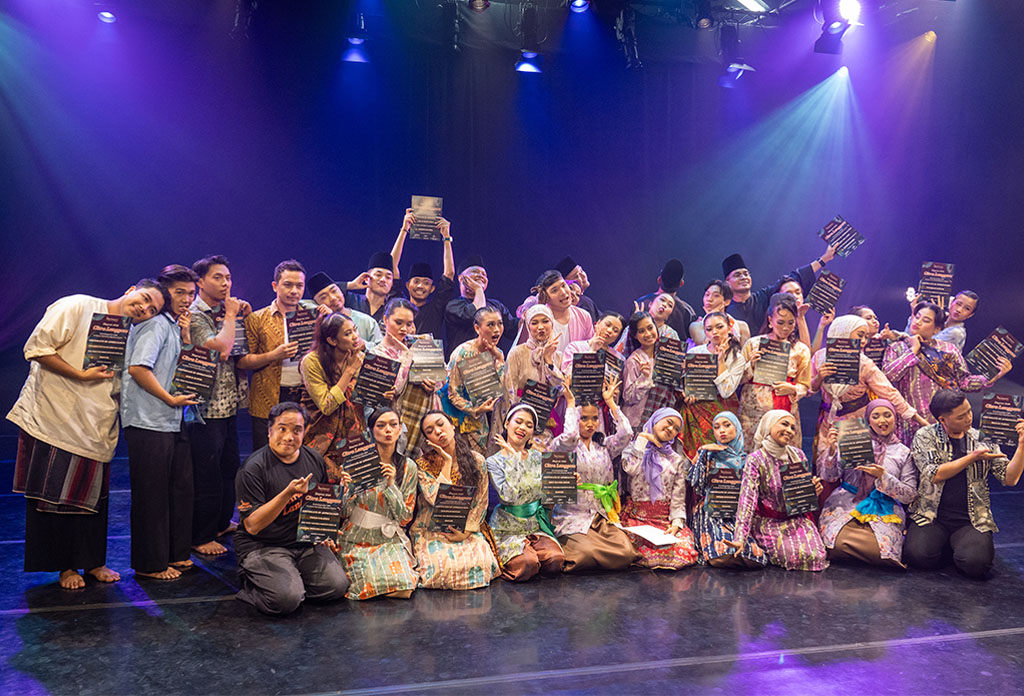
Dr Noramin Farid posing with the performers from Ekspresi 2026: Citra Langgam, a production across four Malay dance groups featuring the five foundational genres of Malay dance.
Yet, as a hybrid dance form, zapin does allow room for creative experimentation. Navigating the balance between tradition and transformation is exactly why zapin remains a living, breathing art form.
“For a form to continually exist, we must continue to practise and innovate. I'm excited for the future of zapin and the innovations that will come. But my hope is that it remains rooted in its origins, and that its practitioners continue to acknowledge the ecology in which it was first created.”— Dr Noramin Farid
By holding fast to zapin's origins, Dr Noramin believes the next generation of dancers will have a strong foundation from which to draw inspiration and chart new directions.
“Zapin meant enough to my ancestors and their communities that they made it their own. It has withstood centuries and is still practised today — that tells you it still means something to the Malay community.
I’m a sentimental person. I know when I talk about or practice zapin, I am carrying a whole legacy forward. It is a dance form I can return to every time I want to create something new. Its rich philosophy is a deep well that we can draw from to remember who we are.”