
Article
The Family Keeping Teochew Puppetry in Motion
29 May 2026
Heritage is a family affair for Christine Ang. Step behind the curtains of Singapore’s Teochew iron rod puppet troupe as they share their journey of resilience, and their unwavering love for the stories they bring to life through puppetry.
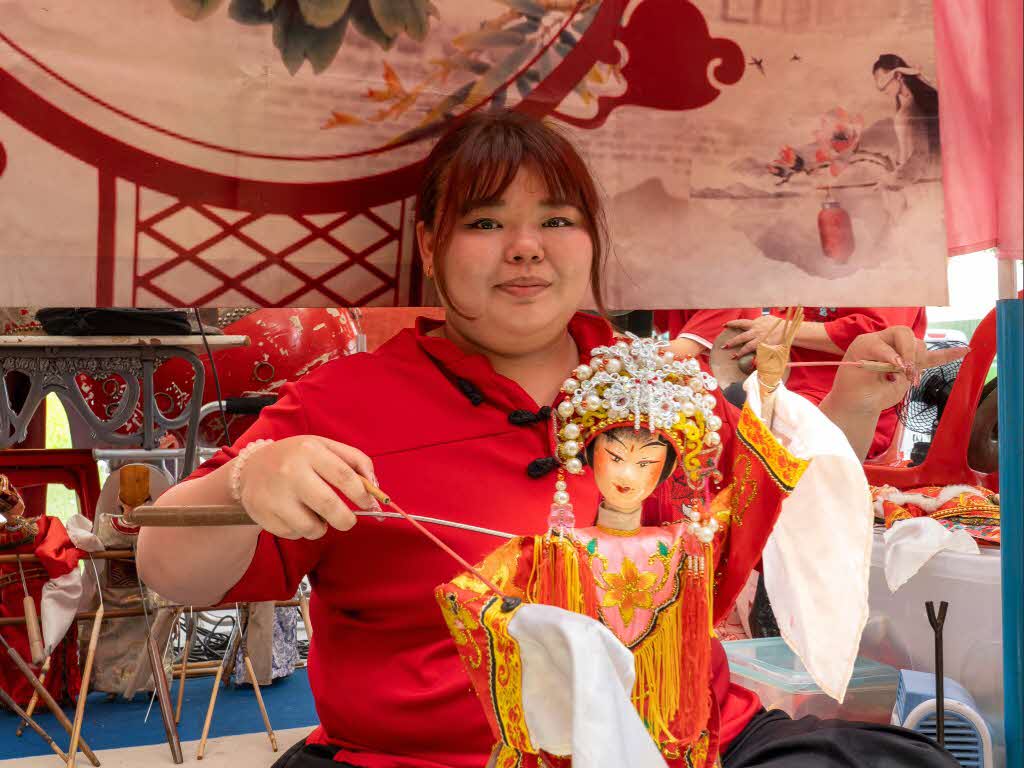
Christine posing with her traditional Teochew puppet.
28-year-old Christine Ang is the third-generation custodian of Sin Ee Lye Heng, Singapore’s Teochew iron rod puppet troupe.
Tracing its roots back to Chaoshan, a city in Guangdong, China, Teochew puppetry evolved from two-dimensional shadow puppets into the intricate 3D iron-rod figures seen today — a tradition carried over by migrants to Singapore in the late nineteenth and early twentieth centuries.
“Growing up, I remember my younger brother and I would pretend we were opera performers at home. We would drape the legs of long pants around our necks, so that they looked like capes and imitated their on-stage actions.”
Playtime and imagination have since morphed into performing for an actual audience. Now, Christine is helping out in her family’s troupe to preserve this centuries-old art form in Singapore.
Brought up by generations of puppeteers
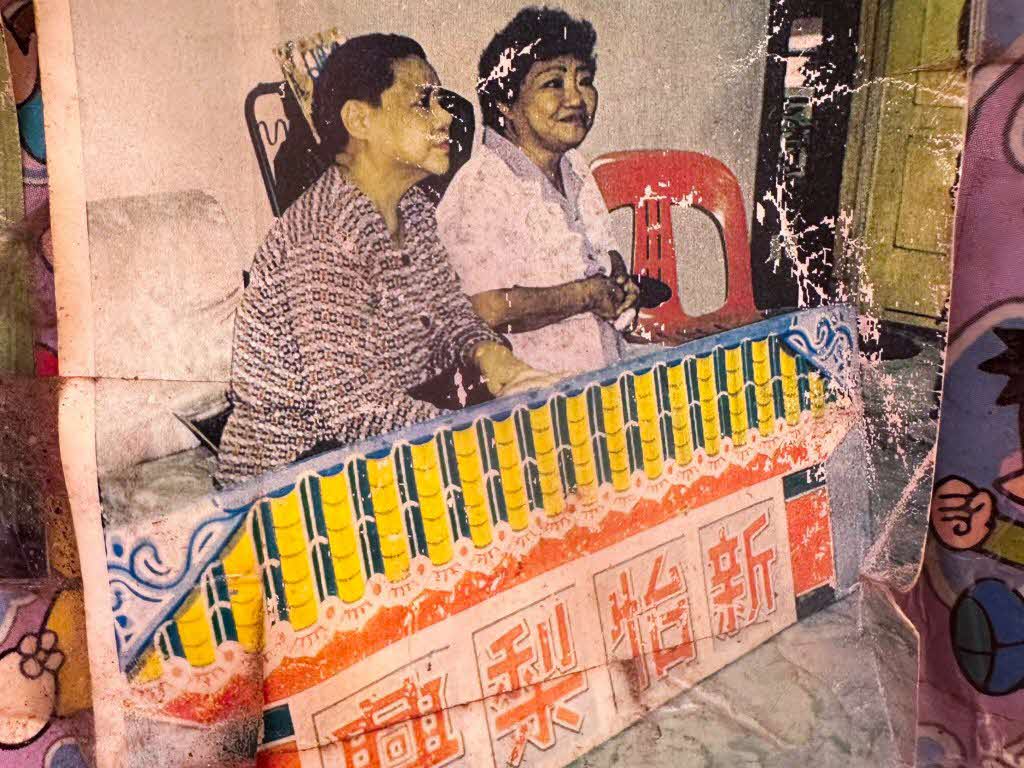
Christine’s grandmother (right) posing with her first puppet show signage.
It was through watching opera that Christine’s maternal grandparents met – and also what led the family to eventually enter the Teochew Opera trade.
“Even though my grandfather was the ang moh type who spoke English and had anglicised manners, he loved watching Chinese opera. That’s where he met my grandmother, who was an opera actress. He pursued her, and eventually they got married.
Eventually, the couple founded a Teochew opera troupe doing qing chang (opera singing without staging or makeup), later adding puppetry and da xi (longer performances, complete with elaborate costumes and musical ensembles).
Though Christine’s mother initially had other plans for her children, their natural talent and love for the craft were undeniable. As the world around them changed, their passion for the tradition never did.
It wasn't long before Christine and her brother found themselves on stage, and their mother could see just how naturally puppetry came to them. Recognising their gift, she guided them and gradually involved them in the business.
Challenges of learning puppetry and running a troupe
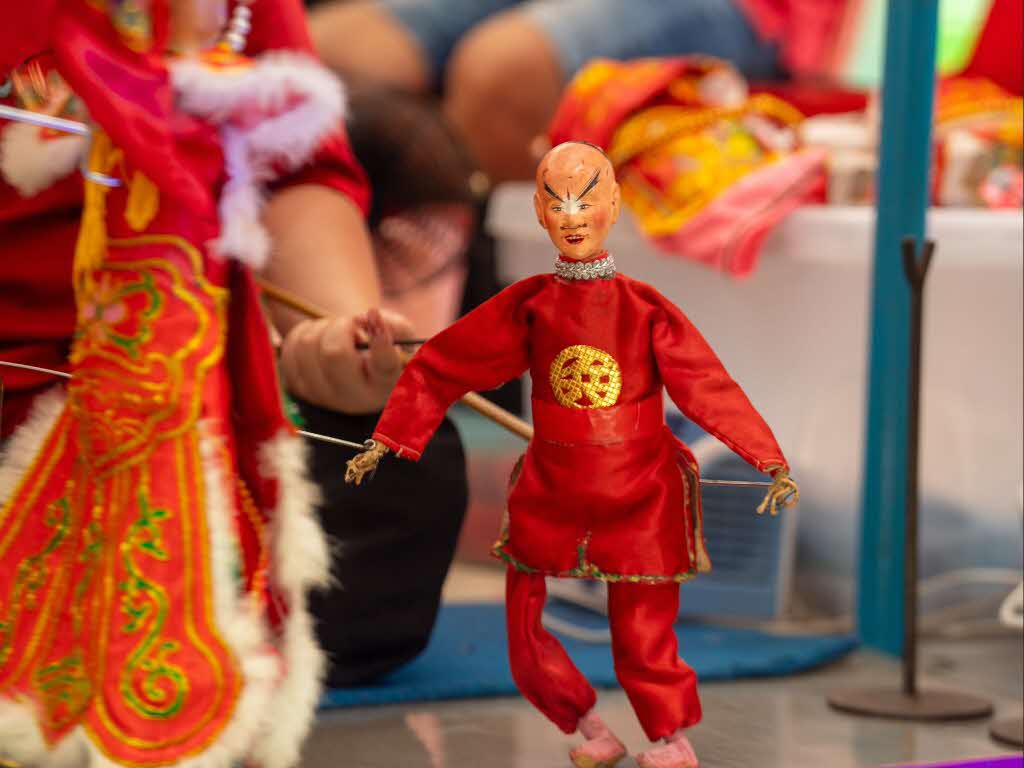
小兵 (soldier), a minor character in Teochew Puppetry.
The troupe uses puppets made of clay and porcelain that are more than 40 years old. Compared to the modern wooden puppets, these traditional puppets are heavier and more expressive, carrying a liveliness that newer versions rarely match.
Each 25cm-long puppet is controlled by three mental rods attached to its back. One rod holds it upright while the other two control its movements. In a single play, more than ten puppets may take the stage, leaving performers to manage upwards of 30 rods at once.
“At first, the hardest part of learning puppetry was managing the puppet’s weight. A show runs for up to three hours, and this means being under the heat while supporting the puppet for that duration.
There is also the fear of accidentally breaking the puppets. If you’re not careful, the inserted rod might unhook, and the puppets fall over. In the process, they may lose half an ear or a nose. Repairing them is costly, if I can even find a skilled artisan to fix them."
Sharing the spirit of Teochew puppetry with the next generation
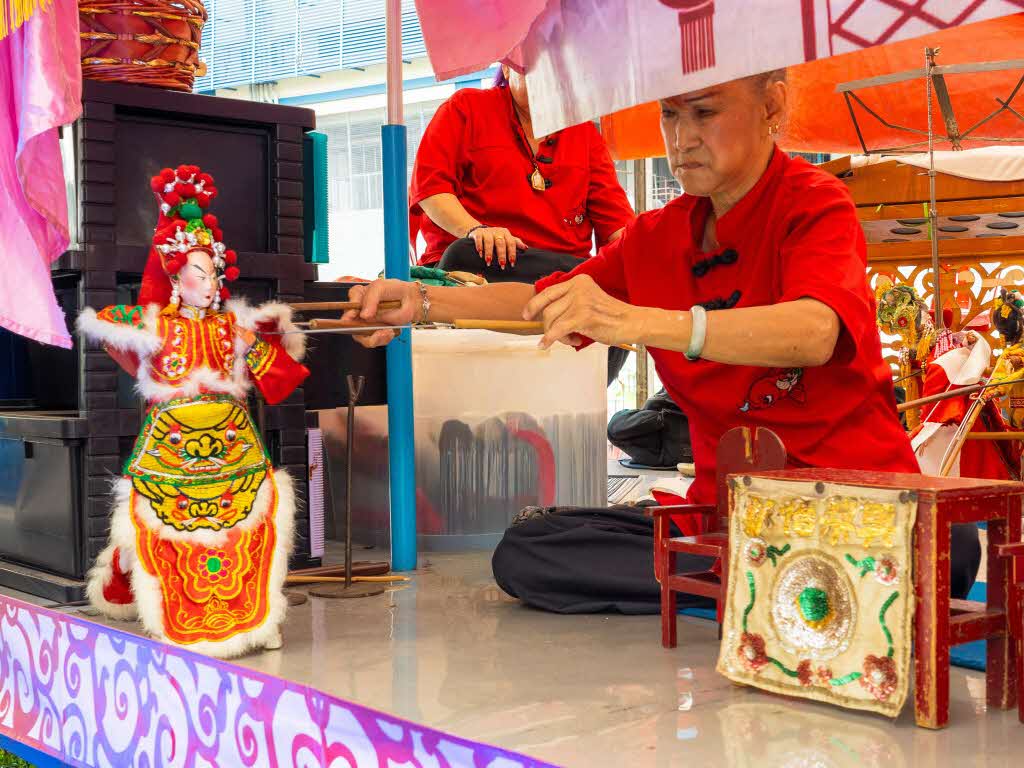
Sin Ee Lye Heng troupe member with a 将军 (military general) puppet.
As Christine grew more deeply involved with Sin Ee Lye Heng, her passion for sharing the art form with new audiences only grew.
“When we put on shows, some young people do stop and watch. But because they don’t understand Teochew and struggle with the language barrier, they would usually leave after ten minutes. So, more often than not, the troupe performs for the deities and elderly folks.”
Christine has been exploring ways to bridge that gap for young audience members, from providing subtitles to doing community outreach. She liaises with schools and museums to bring Teochew puppetry directly to younger audiences. Through hands-on workshops and immersive experiences, she hopes the audience can leave with positive memories of puppetry.
I want to pass down our Singaporean street opera culture to the next generation and have others experience it. Not as the fancy theatre opera that is performed on a big stage, but the traditional Teochew street opera of old Singapore, where as soon as you step out the door, you’d see an opera everywhere. Teochew street opera is a living part of Singapore’s heritage, and I want people to feel and experience that once again.— Christine Ang
This is just one of many cultural experiences waiting to be discovered. Explore more performances and creative experiences through SG Culture Pass (opens in new tab) and deepen your connection with the arts and culture scene. If you would like to experience Teochew puppetry in Singapore, follow the Sin Ee Lye Heng Facebook page (opens in new tab) for their upcoming schedule. Most shows are held at Chinese temples and are performed as tribute to the deities.