
Articles
From goalball to judo: How para-athlete Joan Hung’s bold pivot to a new sport paid off
20 January 2026
Kaya speaks to Para athlete Joan Hung as she takes on a new battlefield as a Para Judoka—and leads the Singapore contingent as the flag bearer for the 13th ASEAN Para Games.
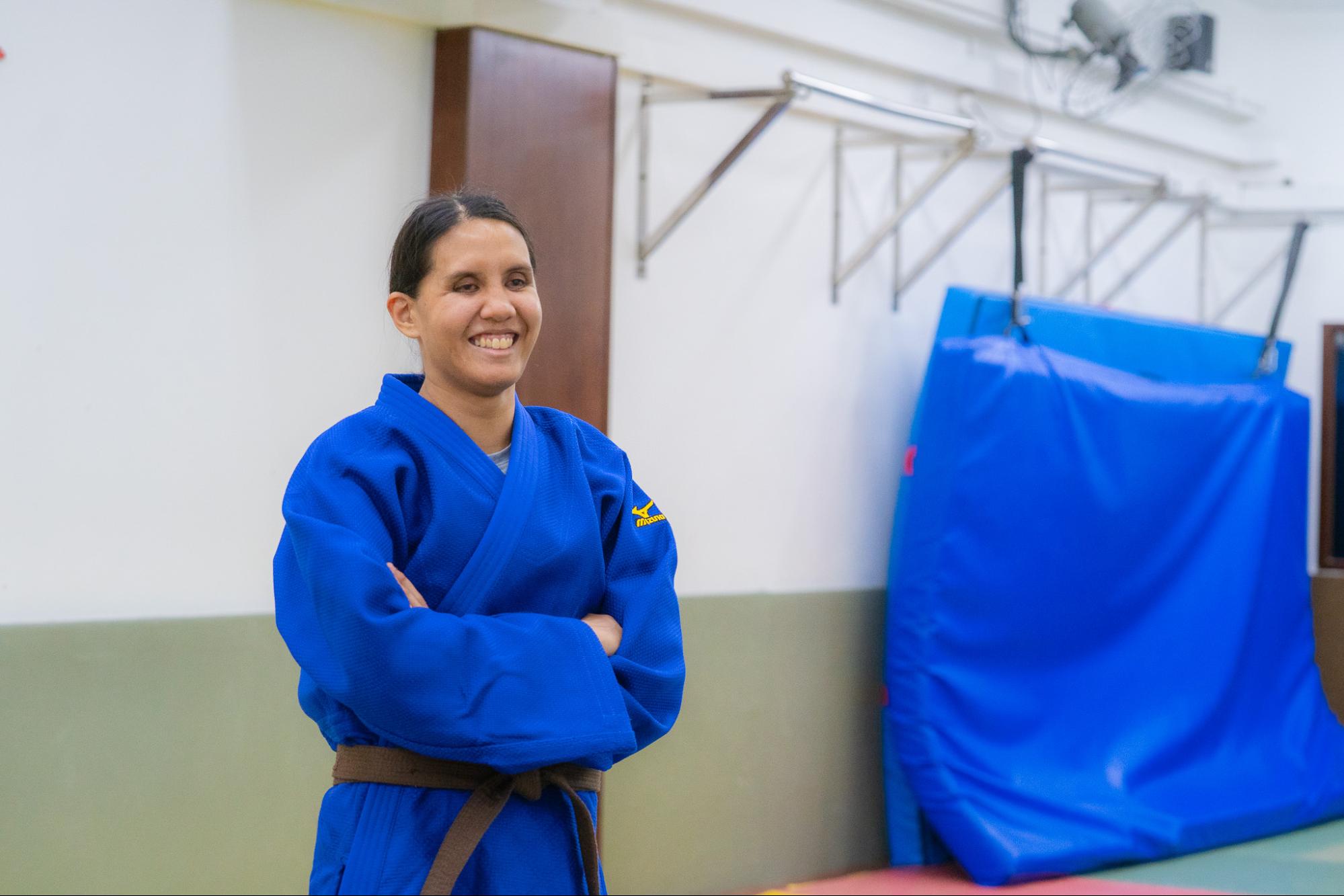
Joan Hung, National para judo athlete
Joan Hung is Singapore’s only national para judo athlete. “While para judo is very popular worldwide, no one in Singapore does it except me. That’s why initially, everyone I trained or fought with was sighted,” she explains.
Her first time sparring with another visually-impaired opponent only happened in June 2025. That was when she fought to qualify for the 2025 ASEAN Para Games, happening from 20 to 26 January 2026.
The upcoming ASEAN Para Games in Nakhon Ratchasima, Thailand, will not be the first time the 30-year-old has represented Singapore. Joan has a goalball Women’s Team silver from the 2022 ASEAN Para Games, and participated in her first Games in 2015.
From goalball to judo: why she made the switch
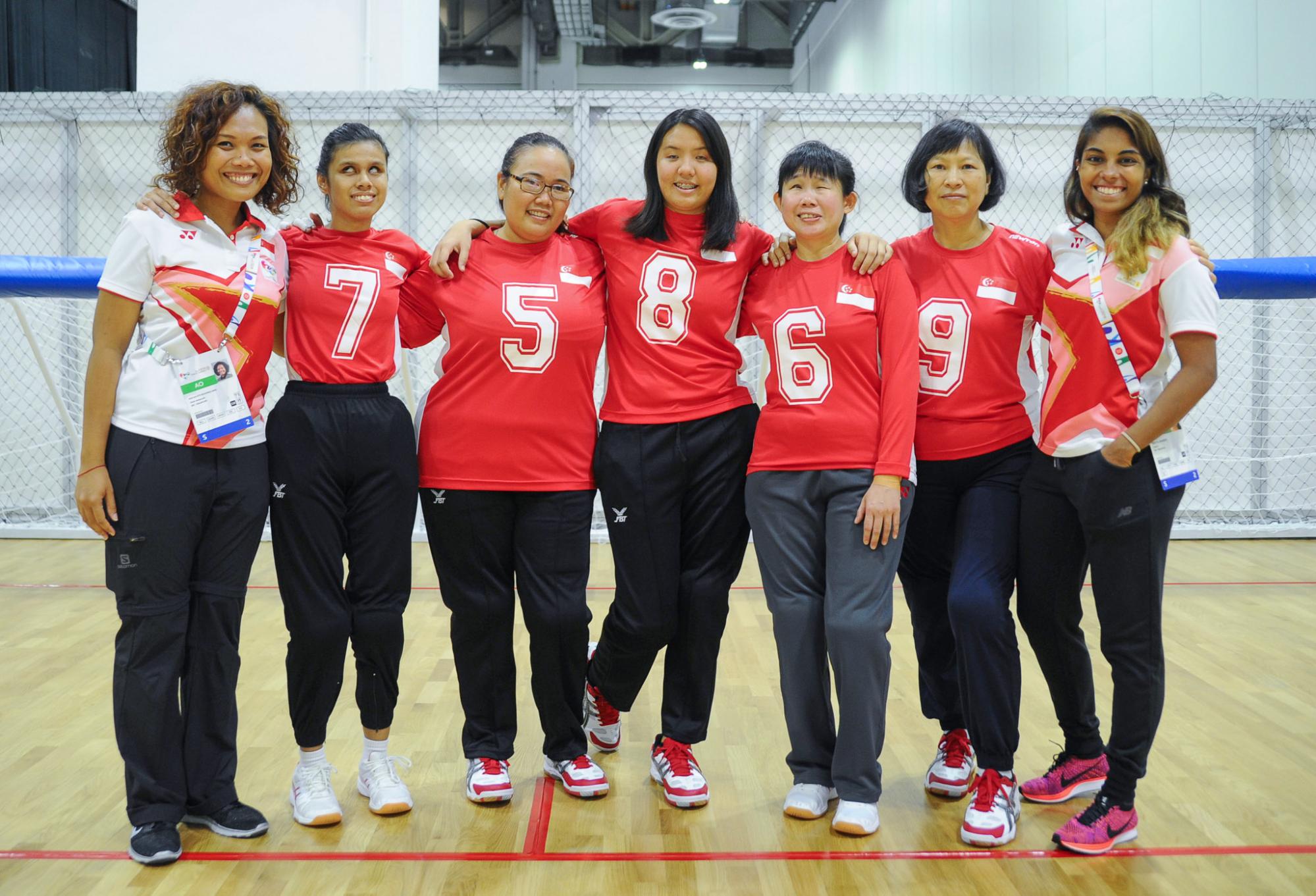
Joan (centre) at the 8th ASEAN Para Games. Photo credit: SDSC
From a young age, Joan had always enjoyed ball games, especially basketball. But as her sight deteriorated, it became more difficult to play. At 19, some ex-colleagues invited her to try goalball and Joan was hooked.
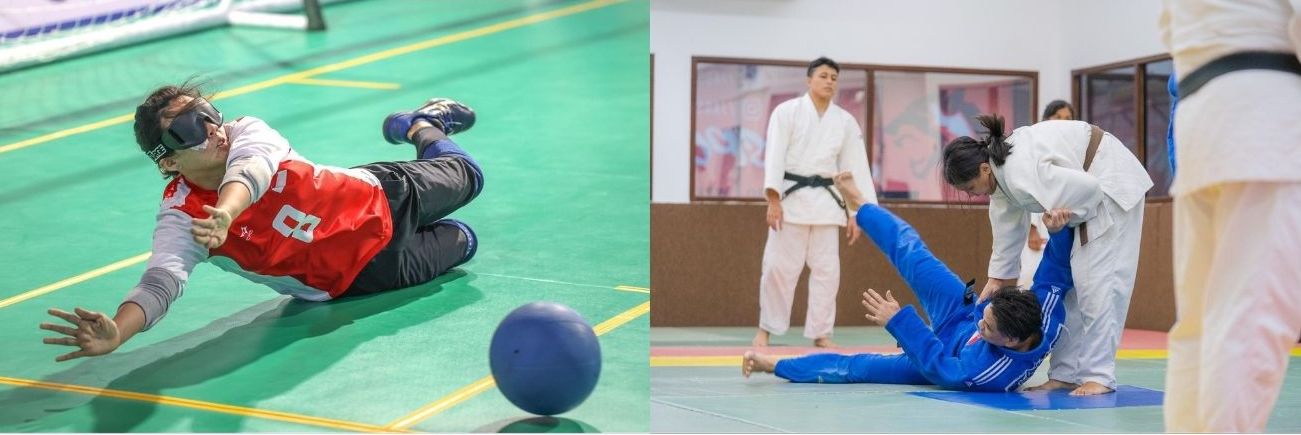
Goalball is a three-person team sport where players aim to throw a ball, which contains bells, into their opponents’ goal. The sport is specifically designed for visually impaired persons, and there are tactile lines on the ground that allows players to feel and orientate themselves on the court. Players stay in front of their net and remain on their hands and knees for majority of the gameplay.
Eventually, she went on to become a Team Singapore goalball athlete. During the off-peak competitive seasons for goalball, Joan practised judo at her coach’s encouragement.
In 2022, the goalball team disbanded due to players moving on from the sport and having injuries. That was when Joan decided to make the switch.
“My parents and friends were quite chill and supportive when I told them I was going to compete in para judo. They would always encourage me to try new things and approach my interests with curiosity.”
Challenges transitioning from the goalball court to the judo mat
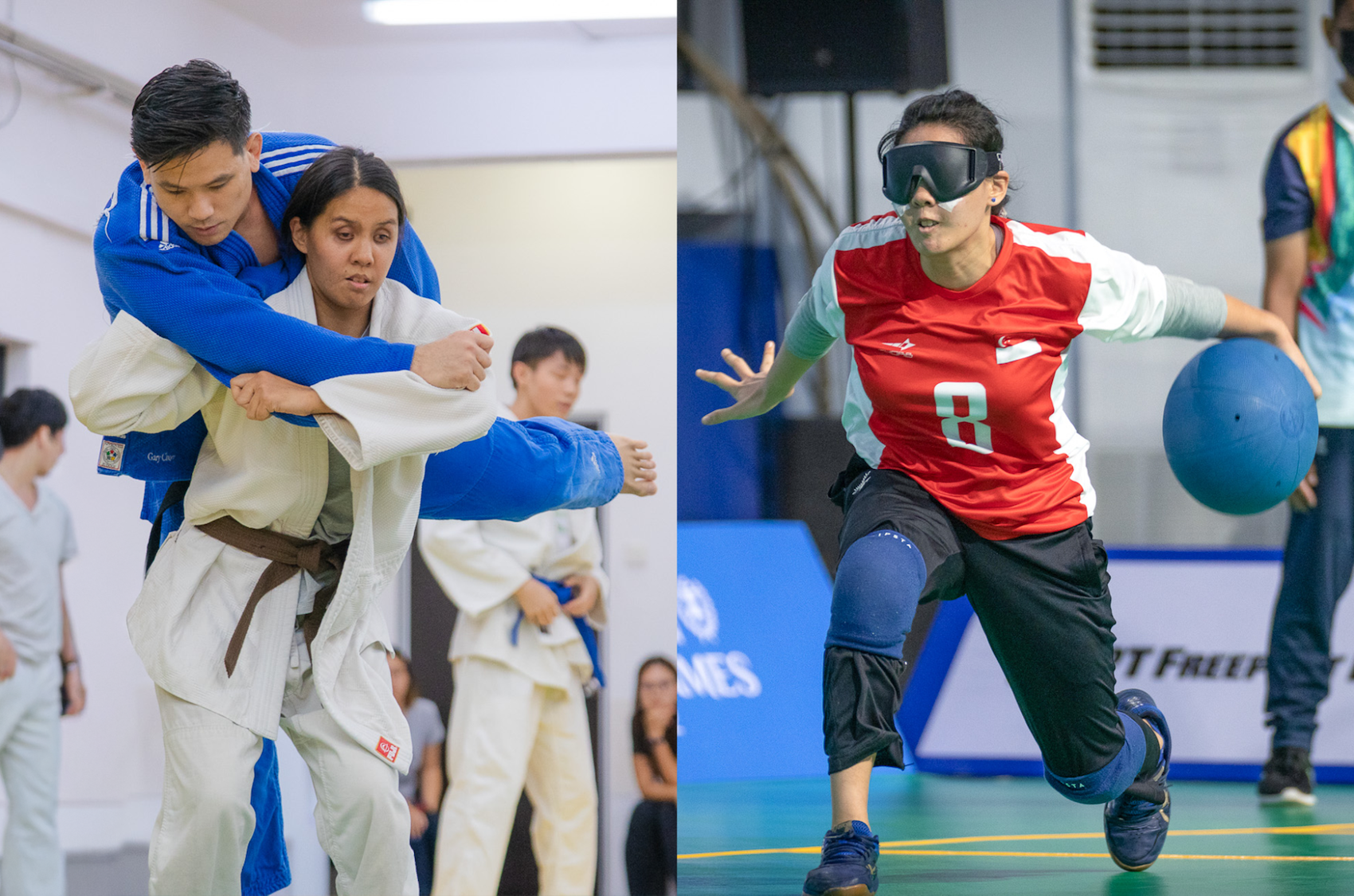
Joan (left) practising Judo drills; Joan (right) taking a shot in Goalball
However, picking up a new competitive sport in her late twenties meant playing catch-up from day one.
Para judo demands that an athlete have great agility and mastery over fine motor skills. Playing goalball for eight years had ingrained certain movement patterns and muscle memory, which needed to be painstakingly unlearned.
Para judo is also a more complex sport, with around a hundred different throws and groundwork to master, such as pins, chokes, and arm bars. In contrast, goalball requires two main skills: throwing and blocking.
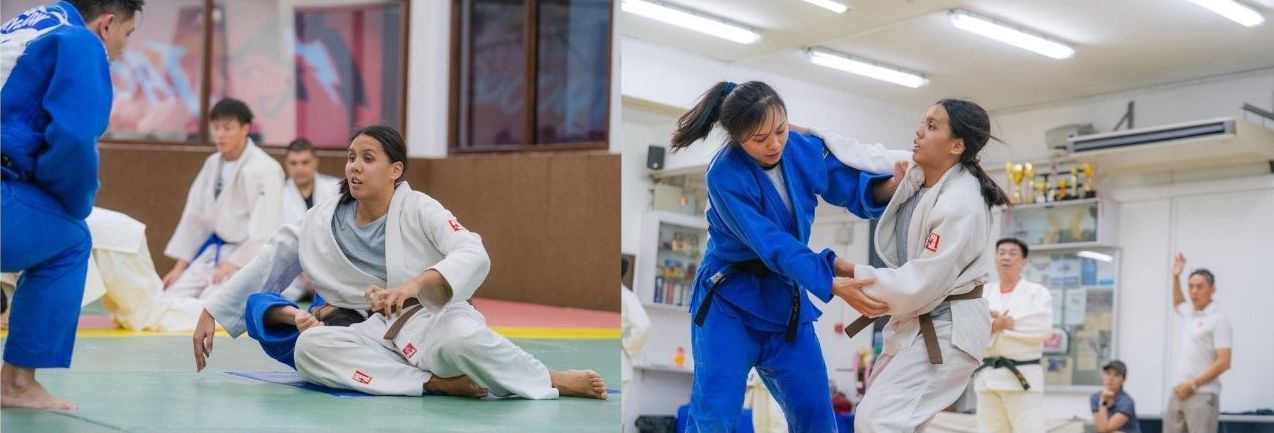
It didn’t help that Joan’s sight had worsened. During practice, she had to rely solely on verbal instructions and tactile demonstrations – to learn how to fight, her teachers would repeatedly physically throw her. But for Joan, the most difficult thing about transitioning from goalball to judo was the noise.
“During my first judo training session, it was so loud. Everyone was shouting. During matches, the spectators are yelling and egging you on. Your well-meaning teammates in the stands are yelling even louder. Your coach is also talking to you between bouts.
In comparison, when you are playing goalball, there is no noise at all. There are signs telling the spectators to ‘Keep quiet, please’. Even your coach can’t give you instructions; if they do, your team gets a penalty.
That’s why in the beginning, I wasn’t used to it and got quite distracted. So, I had to learn how to filter out sounds.”
An advocate for visually impaired youths to play sports
Even though Joan no longer plays goalball competitively, she still coaches the goalball CCA at Lighthouse School and a separate community programme, Parasport 360: Discover Goalball, spearheaded by the Singapore Disability Sports Council, for visually impaired participants.
“Before I started coaching goalball in 2020, the school did not offer any sports CCA options to the kids. Unfortunately, there aren’t many opportunities for people with disabilities to play sports.”
For visually impaired persons, she emphasises the importance of learning how to navigate surroundings and fall safely, as it lowers the chances of injury. Playing sports provides a safe way to get physical and explore movement. The younger you are, the easier it is to pick up these skills.
Having more people with disabilities play sports also translates to an opportunity for the parasports scene to grow. For now, Joan shares that it’s mostly kids who have a more severe visual impairment participating in parasports.
“There are lots of other partially blind children in mainstream schools that we cannot reach out to. In part, it’s due to the Personal Data Protection Act laws. The other factor is the lack of acceptance.
Sometimes, individuals or parents may not accept that they have a disability. So, they would prefer not to play parasports and distance themselves from the association.”
Educating the general public that disability is a spectrum would dispel this stigma. Introducing inclusive sports like goalball into the mainstream PE curriculum would also help.
“If you are a parent of or a person with disabilities and are hesitant to give sports a go, just try. You may find that it is something you really like.”
Being a sporting role model
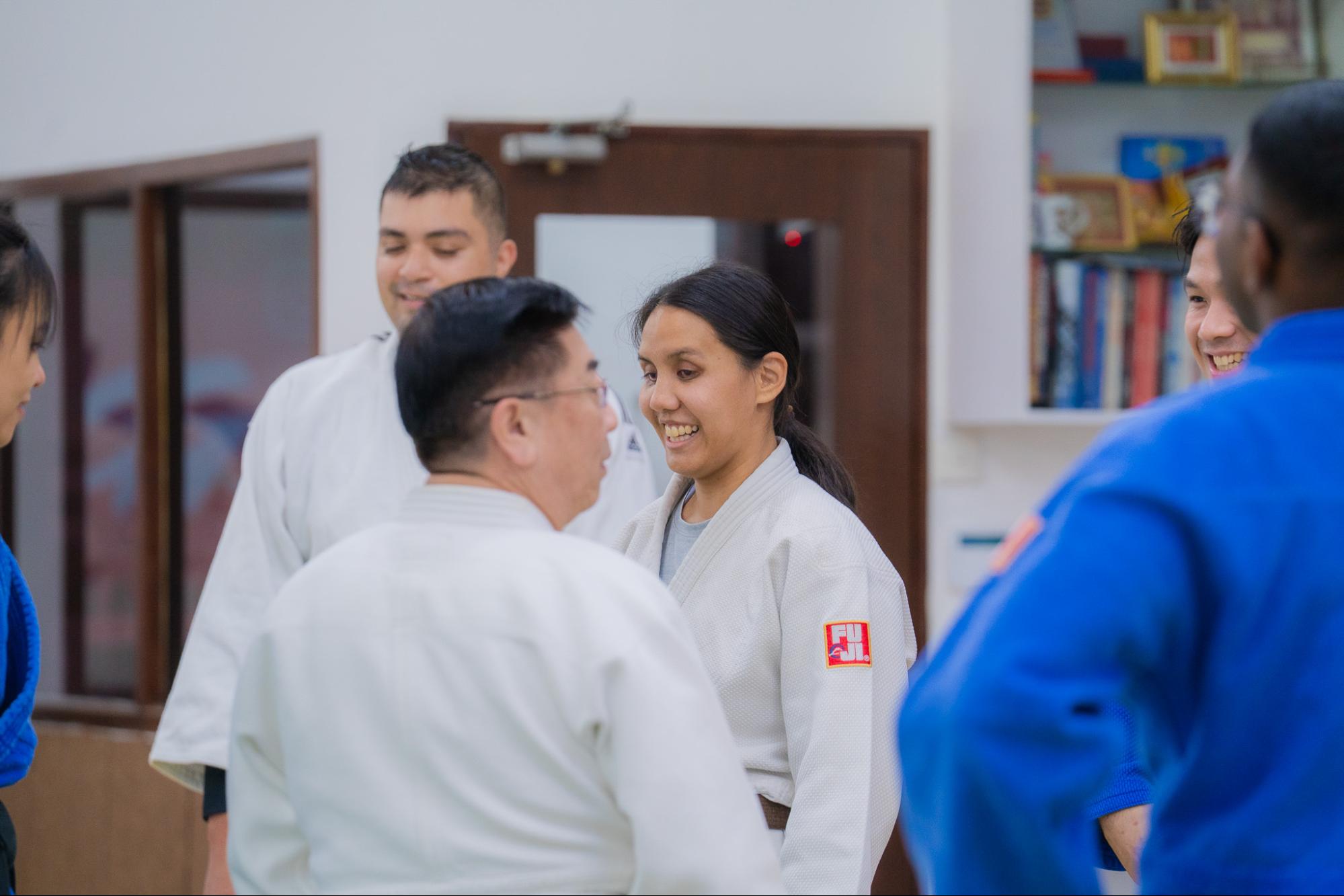
Joan during training with sighted athletes at her gym
At the 13th ASEAN Para Games, Joan will compete in the Women’s J1/2 under 60kg category. Her goal is to medal.
“I’m excited and nervous to compete. I don’t have a lot of experience fighting other visually impaired persons which could be my disadvantage in the upcoming Games.
But I choose to trust in my training and that it will work out. As long as I do my best, I am not going to regret anything that happens on the mat.”
Beyond competing, Joan is also the sole flag bearer leading the Singapore contingent for the opening ceremony.
“I am honoured and touched. This year marks a decade since I've been in the sporting scene and my transition to becoming a national para judo athlete. With luck, it's a sign of even better things to come.
I hope my sporting career can inspire other athletes to believe that it is possible to embark on something different and switch sports. With judo, I aim to compete for as long as I can!”