
Articles
From silat to wushu sanda: How this athlete’s fighting spirit led to a historic SEA Games medal for Team SG
4 March 2026
Meet Siti Khadijah, Singapore's first female sanda athlete to win a medal in the most recent SEA Games. This would not have been possible without an initial setback, a strong support system, and a touch of destiny.
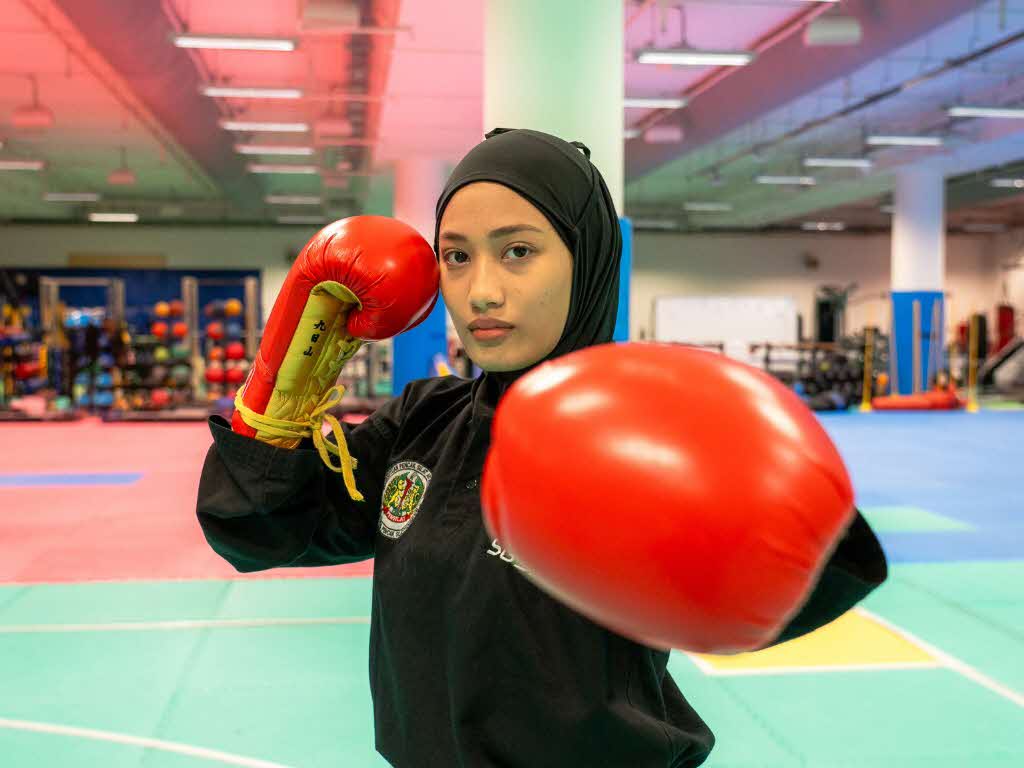
Siti Khadijah Binte Mohamad Shahrem, Singapore’s national silat athlete and wushu sanda medallist.
On 14 December 2025, Siti Khadijah became Singapore’s first female wushu sanda medalist at the 2025 Southeast Asian (SEA) Games in Thailand. The 25-year-old secured a joint bronze in the Women’s Sanda Under 60kg category, just four months after switching from silat.
“During the SEA Games, I was crying a lot because I had so many emotions. Two hours before my first fight, I cried. I won, and then I cried. The next day, I fought in the semi-finals and cried right after because I lost by a few points.
If I feel like something touched my heart – be it happiness, sadness or anger – I tend to cry. I was overwhelmed that so many of my teammates came to support me. I was so heartbroken about losing the match. I was crying because I felt so proud of myself that I took this risk.”
Through a mix of adaptability and a steadfast belief in destiny, here is how Khadijah embarked on an emotional journey and won a historic SEA Games medal for Singapore.
Falling in love with silat at 11: Giving up dancing for fighting
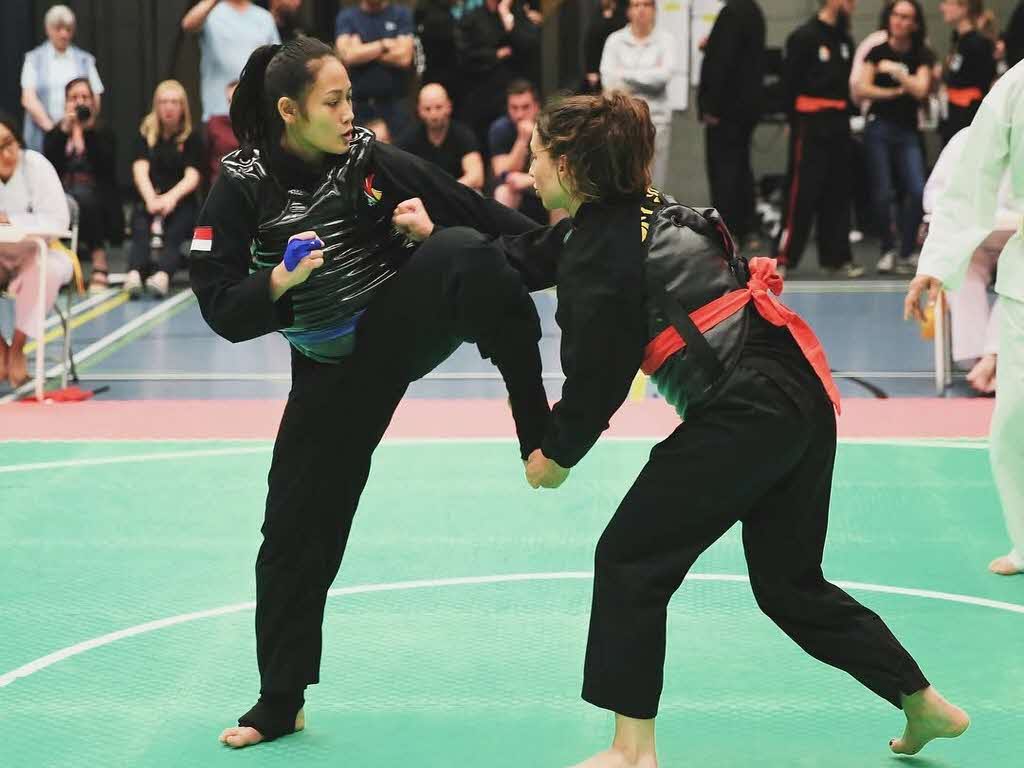
Khadijah in Belgium Open 2016.
As a child, Khadijah wanted to follow in her mother’s footsteps and be a dancer. While her mother specialised in contemporary and hip hop dance, Khadijah pursued tap dancing.
Despite her best efforts, she was rejected thrice from the School of the Arts (SOTA) dance programme. One day, after dance practice, her father took her to a mosque to check out a silat class.
“It was a complete culture shock, like what in the world is this? I was very shy and spent 30 minutes sitting down and watching. Suddenly, the coach asked, ‘Why don’t you try giving me a kick with the kicking pads?”
It took just one kick for 11-year-old Khaidjah to fall in love with silat.
“I felt so happy. It’s a feeling I can’t really explain – I felt like I belonged to the sport. When we reached home, I told my mum that I was sorry that I could not continue her dance legacy and wanted to do silat.
Rejection is redirection: Losing out on the SEA Games silat spot
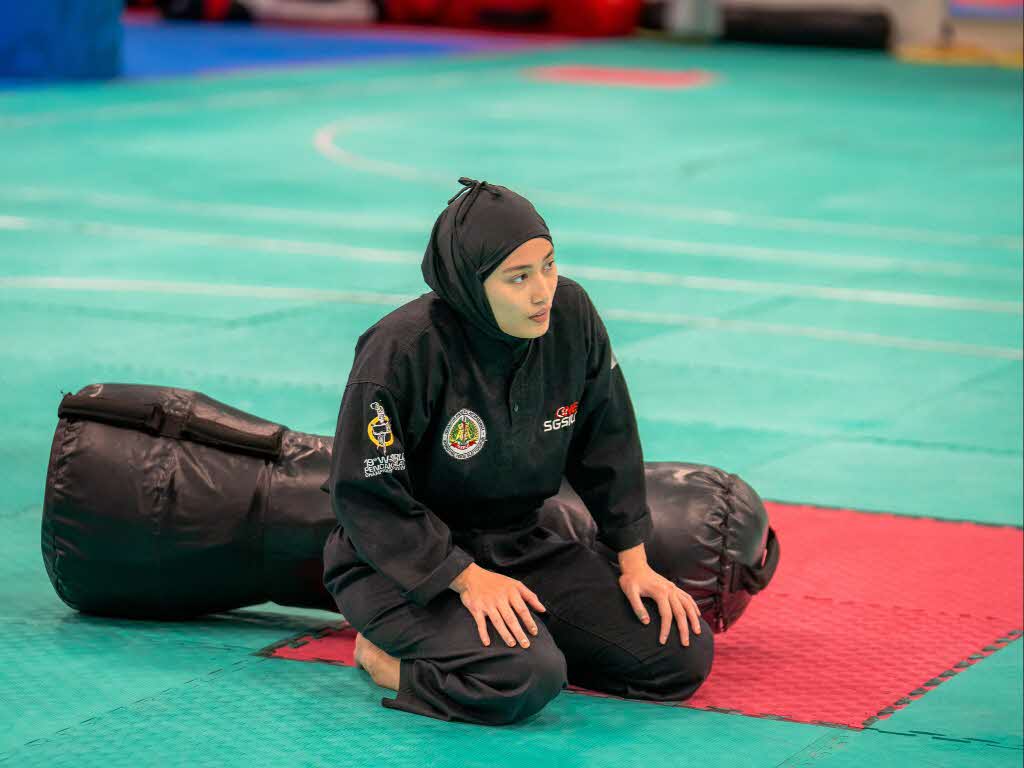
Khadijah taking breaks in between training.
Khadijah went on to medal in several events, including the 2022 SEA Games and 2018 Asian Games, as well as winning gold at the 8th Southeast Asia (SEA) Pencak Silat Championships. She even earned a nomination for Sportswoman of the Year at the 2023 Singapore Sports Awards.
But during the Singapore Silat Federation’s internal selection trials in March 2025, she failed to secure a spot for the 2025 SEA Games. The decorated athlete thought her hopes to compete for a third consecutive Games were dashed.
“When the trial happened, I wasn’t my best self. I was fresh off competing in the World Championships 2025 and was injured. Plus, I had lost a lot of weight to meet the weight requirement for the silat trials – in just one month, I went down from 65kg to 59kg."
While mourning her lost opportunity, she got a call from national silat head coach Rafili Ramli. He asked if she would be interested in trying out for wushu sanda instead. After getting her family’s blessing to compete, Khadijah began her foray into her new sport.
Overcoming challenges when pivoting to wushu sanda
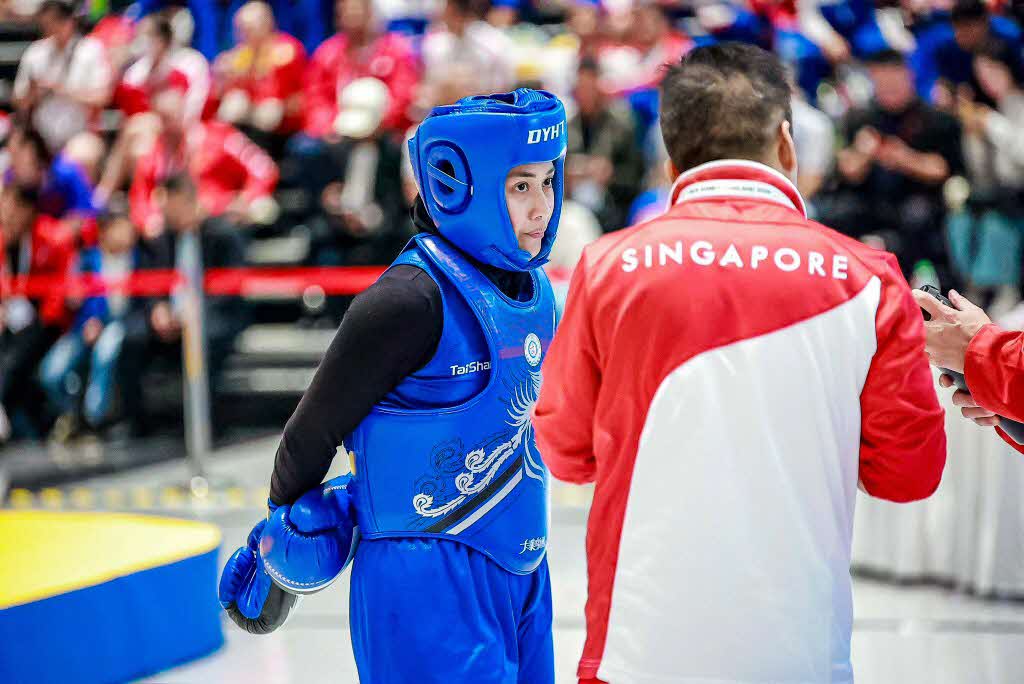
Khadijah and her sanda coach at SEA Games 2025.
With only four months to prepare for the SEA Games, Khadijah was on a tight timeline to pick up the sport. Besides learning new rules and techniques, Khadijah also had to grapple with being the first non-Chinese athlete in the wushu sanda space.
Like pencak silat, wushu sanda is a full-contact combat sport. However, wushu sanda is more aggressive as it permits direct head and neck strikes. Wushu sanda athletes fight with mouth and chest guards, gloves and protective headgear.
“It really hurts – the first time you get hit in your face. If you see an incoming punch, most people would flinch. I had to learn to get used to the pain and to overcome this instinct.”
However, it helped tremendously that her teammates and coaches were “very nice and welcoming”.
“Despite coming from different backgrounds and having different races and religions, we are very open to learning about each other. During training, my hijab would fall off when grappling. When that happens, my coaches will automatically turn around until I fix it.
My other teammate, Yu Han, is also always looking out for me. If she sees my hijab coming undone, she will immediately jump on me to cover me. The support I have from them and their respect for my beliefs touch me deeply.”
Trusting in the power of destiny
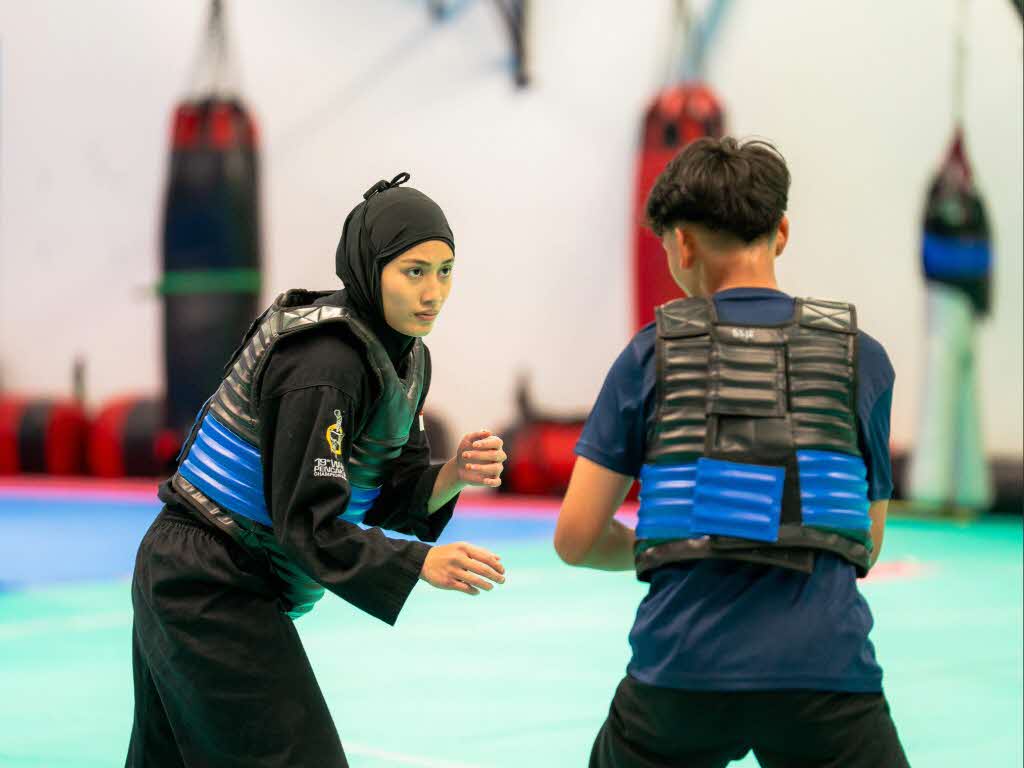
Khadijah sparring a teammate during training.
Khadijah's journey was shaped by her hard work, along with financial support from SPEX, the High Performance Sport Institute’s belief in her potential, and Sport Singapore's cross-combat sports programme.
Khadijah already has her sights set on participating in the 2029 SEA Games, after which she will retire from fighting. But whether it be through silat or wushu sanda remains a question.
“I think it’s my job as a fighter to say ‘yes’ if there is an opportunity that comes by to compete. And though I do enjoy wushu sanda, my first love is still silat. If I am selected to participate in silat, I will go for it.
But I feel everything is destined. Even though we may try hard for something, sometimes if it’s not meant for us, then better things will come.
Even though I lost out at the silat trials, I continued to train. If I didn’t put in the work, I don’t think I could have performed in the SEA Games for wushu sanda. So, I’m more than grateful for everything.”
Siti Khadijah’s journey highlights the challenges athletes may face. With financial support and a strong, holistic sporting ecosystem, athletes are able to fulfil their sporting aspirations. Visit Sport Singapore for more information!